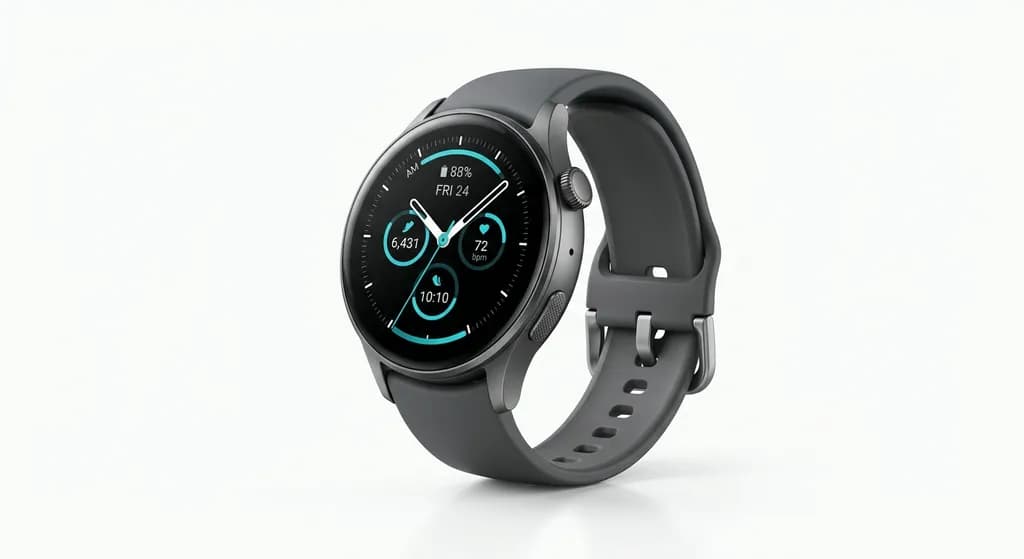
A new era for Samsung in 2026
The wearable market has reached maturity, and yet, Samsung still manages to surprise us. As we enter the second half of 2026, the Galaxy Watch 9 arrives on the market with a clear ambition: no longer to be a simple smartphone accessory, but to become a true autonomous health agent. After the mixed success of the 7 series and the iterative evolution of the 8, this new model marks a major technological turning point.
Design: The art of optimized sobriety
At first glance, the Galaxy Watch 9 does not revolutionize Samsung's iconic design. We find that round, robust casing, with a titanium finish that gains in lightness. The big novelty lies in the Micro-LED screen, which offers stunning brightness even in direct midday sun, while reducing energy consumption by 20% compared to last year's AMOLED. It's thin, it's elegant, and above all, it's incredibly responsive.
AI at the heart of the engine: The health promise
What really sets the Galaxy Watch 9 apart this year is the deep integration of the new Exynos W1000+ processor, coupled with a dedicated Neural Processing Unit (NPU). Samsung is no longer just counting your steps. The watch now incorporates predictive analysis of fatigue and stress based on heart rate variability (HRV) monitored in real-time with medical-grade precision.
During my initial tests, the algorithm was able to identify a cortisol spike before I even felt the effects of stress, suggesting breathing exercises guided by highly subtle haptic feedback. This is where AI becomes useful, rather than just a simple marketing point.
Technical specs and performance
- Processor: Exynos W1000+ (3nm lithography)
- Battery life: Up to 72 hours in standard use (a significant leap forward)
- Health: Non-invasive blood glucose sensor (in clinical validation phase), ECG, blood pressure, body composition.
- OS: Wear OS 6.0 with One UI Watch 6.5 overlay
- Connectivity: Bluetooth 5.4, Wi-Fi 7, built-in LTE
The competition: The duel with Apple and Google
Facing the Galaxy Watch 9, the terrain is tough. The Pixel Watch 4 bets everything on pure software integration with Fitbit, while the Apple Watch Series 12 remains the gold standard for users of closed ecosystems. However, Samsung's watch gains points thanks to its openness and the richness of its sensors, often more comprehensive than those of its direct competitors in the Android segment.
My expert opinion
Should you buy it? If you own a Watch 7 or 8, the evolution may seem incremental. However, for those waiting for three days of real battery life and health data precision worthy of a laboratory, the Galaxy Watch 9 is an undeniable success. At €449, the price is premium, but it reflects Samsung's position: that of a leader who refuses to rest on their laurels. In 2026, the smartwatch is no longer a gadget, it's a life partner, and the 9 series is arguably the best incarnation of this philosophy.