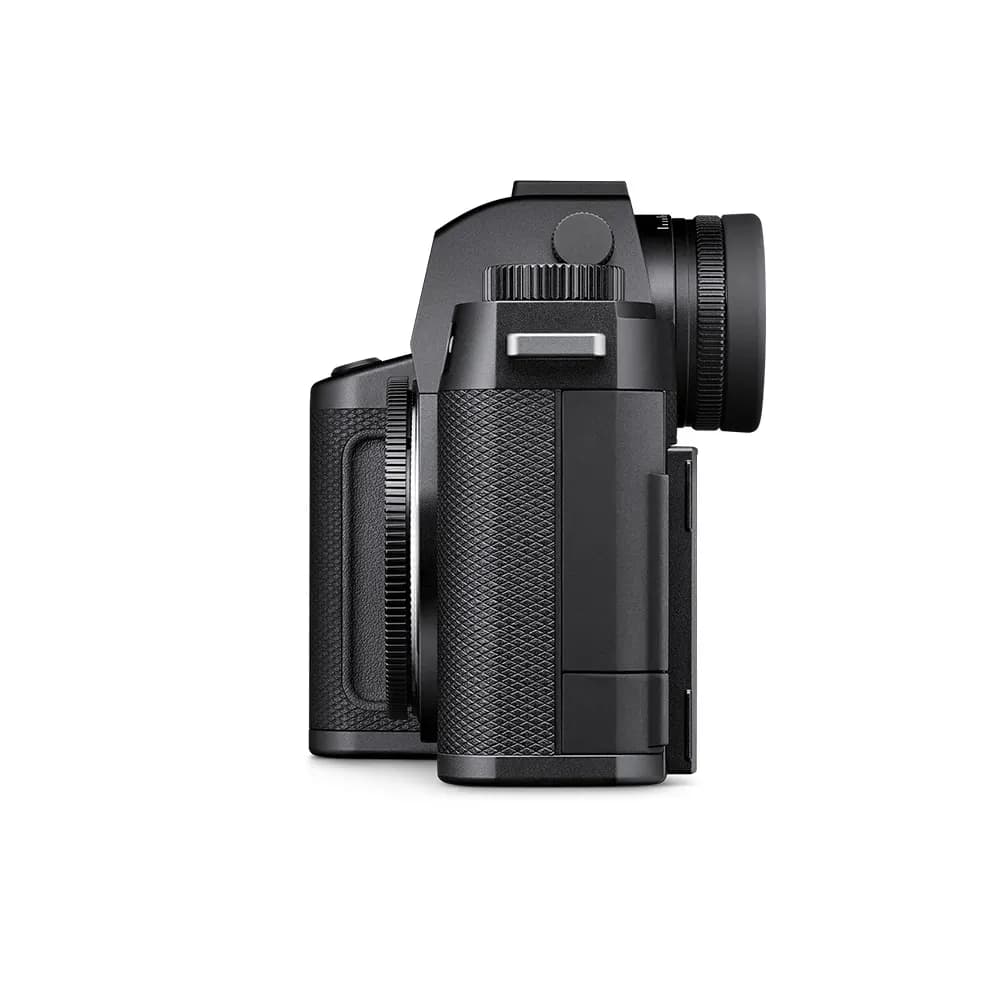
German excellence pushed to its peak
Since the launch of the SL range, Leica has constantly proven to us that the brand wasn't just about iconic rangefinders. In mid-2026, the arrival of the Leica SL3-P doesn't just complete the catalog: it shakes up the hierarchy of full-frame mirrorless cameras. The “P” is not there by chance; it embodies precision, performance, and a boost in resolution that leaves the competition breathless.
A sensor that redefines details
At the heart of this machine, we find a new 80-megapixel full-frame back-illuminated (BSI) CMOS sensor. Where the standard SL3 prioritized versatility, the SL3-P is aimed at demanding studio, landscape, and fashion photographers. Dynamic range management is simply stunning: 15 stops of dynamic range that allow for recovering unsuspected details in the densest shadows. Coupled with the Maestro IV processor optimized for this pixel density, the workflow remains surprisingly fluid.
Ergonomics and design: functional minimalism
In hand, the SL3-P is a pure Wetzlar product. We find that magnesium alloy chassis, solid yet perfectly balanced. Leica listened to professional feedback in 2025: the rear buttons have been slightly redesigned for better tactile response, even with gloves. The 9.44-million-dot electronic viewfinder (EVF) is arguably one of the most comfortable on the market in 2026, offering total immersion that makes you forget the digital nature to focus solely on the composition.
Key specifications: the champion's technical sheet
- Sensor: 80 MP full-frame BSI CMOS
- Sensitivity: ISO 50 - 100,000 (extended range)
- Autofocus: Phase-detection hybrid AF with intelligent AI tracking
- Video: 8K 30p / 4K 120p internal 10-bit
- Connectivity: USB-C 3.2, HDMI Type A, ultra-fast Wi-Fi 6E
- Weather sealing: IP54 certified for extreme environments
The showdown: where does it stand?
In the ultra-high-end segment, the SL3-P pulls no punches. It goes head-to-head with the Sony Alpha 7R V and the Hasselblad X2D 100C. While the Hasselblad retains the advantage of medium format for image texture, the Leica wins significantly in terms of responsiveness and lens selection. The L-mount ecosystem, now mature, allows for the use of Summilux-SL lenses that simply have no equivalent among the competition. At 8,500 euros body only, this is not an impulse buy; it is an investment for the next ten years.
Expert opinion: Why splurge in 2026?
I’ll be honest with you: handling the SL3-P means rediscovering the pleasure of photography. In a market saturated with AI and automation that smooths out the rendering, Leica offers here a raw, organic image, endowed with depth of field and surgical precision. This camera is a tool for those who know what they are doing and who demand the best from their sensor. Although the price may cool the enthusiasm of amateurs, for the professional looking for durability and pure image quality, there is simply no alternative as elegant and high-performing this year.