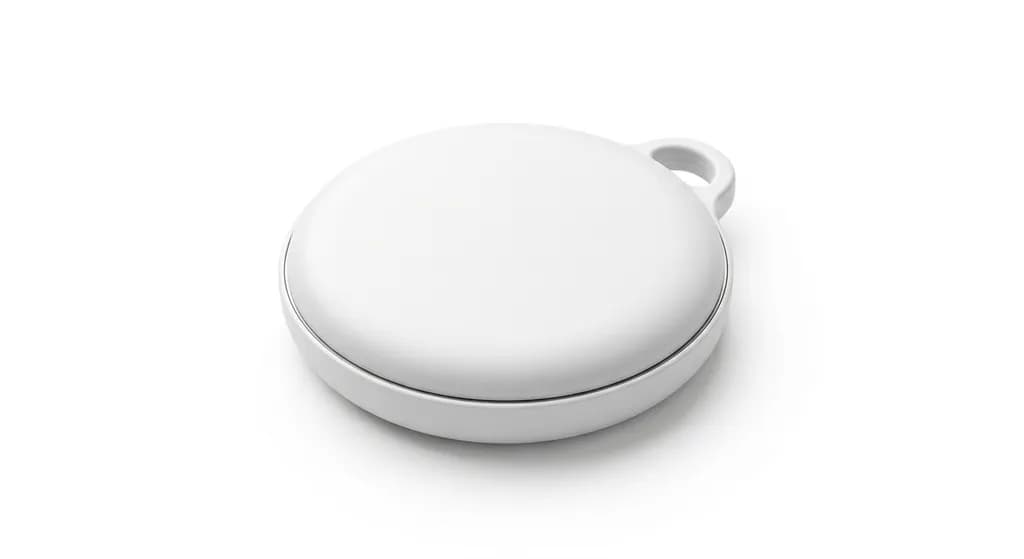
The Google Pixel Tag finally arrives in the ecosystem
After years of rumors, patent filings, and aborted leaks, Google has finally unveiled the Pixel Tag. In this year 2026, the Mountain View firm is no longer content with just selling smartphones and smartwatches; it is finally completing its ecosystem with this small accessory that, on paper, could well make the competition look outdated.
Why so much waiting? Because Google did not want to simply release yet another AirTag clone. The Pixel Tag, as it is presented to us today, relies on unprecedented software integration, powered by a next-generation Tensor chip, to offer a location experience that is both more precise, more secure, and, above all, smarter.
AI at the service of daily life
What is immediately striking about this Pixel Tag is its brain. Where its competitors are content to report a geographical position via Bluetooth or Ultra-Wideband (UWB) networks, the Pixel Tag uses Google's local generative AI capabilities. Concretely, the tag does not just tell you "your keys are in the living room." It is capable, via the "Find My Device" app, of suggesting a context. It can learn your habits: "You forgot your keys at 6:20 PM, your usual return time." This proactive approach is a game-changer.
Technically, we are looking at high-end specifications:
- Connectivity: Bluetooth LE 6.0, latest generation UWB for centimeter-level precision.
- Battery life: Up to 24 months thanks to a replaceable battery and AI-driven power management.
- Security: End-to-end encryption reinforced by Android 17 standards.
- Protection rating: IP68, making it completely waterproof.
Clash of the titans: Pixel Tag vs The competition
The market is saturated, we all know it. Apple dominates with its closed ecosystem, and Tile or Chipolo occupy the universal space. But in 2026, the Pixel Tag is playing on a different field. Google has opened its APIs to third-party manufacturers, yes, but the Pixel Tag benefits from an instant responsiveness that only proprietary hardware can offer. The integration into the Android 17 quick settings panel is exemplary: it's fluid, immediate, with zero latency.
Regarding pricing, Google has adopted an aggressive strategy that is consistent with its range. The Pixel Tag is launched at €39.99 each, or €129.99 for a four-pack. It is slightly above direct competitors, but the differential in AI-related features clearly justifies this gap in my opinion.
Expert verdict: Is it really useful?
Let's be honest: the tracker market has become a commodity. However, as a tech journalist, I see real added value here for heavy users of the Google ecosystem. The Pixel Tag's ability to interact with the phone's calendar and reminders to prevent a loss before it even happens is, in my view, the "killer feature" of this year. If you live in the Pixel world, buying one almost becomes a no-brainer.
Google has succeeded where many fail: transforming a simple utility tool into a proactive personal assistant. Of course, privacy will remain a point of vigilance for the coming months, but the firm has put in place robust anti-tracking measures that reassure, for the moment, even the most skeptical observers.