A clear ambition: dominating the outdoor market in 2026
After an initial bold attempt with the Ultra range, Samsung returns to the spotlight in mid-2026 with the Galaxy Watch Ultra 2. The rugged smartwatch market has become an extremely competitive playground, where Garmin reigns supreme for elite athletes and Apple sets the pace with the Ultra. Samsung has therefore had to rethink its strategy to offer a watch that is no longer just a simple variation: it must become the ultimate tool.
A design that refines its personality
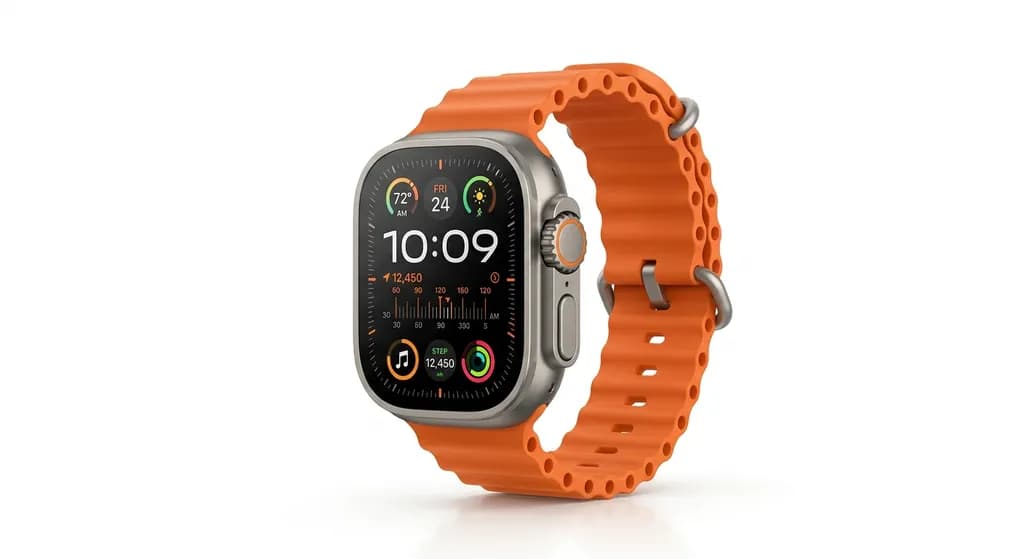
From the first time you hold it, you notice that Samsung has listened to the critics. The 47mm titanium case retains that signature "squircle" shape, but the finishes have been refined. The quick-action button, now fully customizable via a new interface under Wear OS 6, offers stunning responsiveness. The AMOLED display, with a peak brightness that now reaches 3500 nits, is simply the best I have tested this year for perfect readability in direct sunlight, even in high mountains.
Under the hood: power at the service of health
This is where the Galaxy Watch Ultra 2 scores points. Equipped with the new 3nm SoC, the watch is exceptionally smooth. But what impressed me most is the integration of the BioActive 3.0 sensor. In 2026, non-invasive blood glucose measurement remains the Holy Grail, and although Samsung has remained cautious, the stress tracking, recovery, and training load algorithms are now surgically precise, rivaling the industry benchmarks directly.
Battery life, a recurring weak point for Wear OS watches, has taken a notable leap forward. Thanks to optimized energy management and a high-density battery, it now easily exceeds 72 hours under intensive use. That is the comfort needed to head out for a weekend off-the-grid without frantically searching for your charger.
Facing the competition: the match of the year
The Galaxy Watch Ultra 2 finds itself up against formidable opponents. On one side, the Apple Watch Ultra 3, which remains the ecosystem king for iPhone users. On the other, the Garmin Fenix 9 range which, despite a less dynamic screen, offers superior battery life. Samsung positions itself skillfully between the two: an extremely smart and connected watch, capable of handling complex notifications and third-party applications, while offering robustness worthy of military standards (MIL-STD-810H).
My expert verdict
If you are an Android user — and particularly of Samsung smartphones — this watch has no serious rival. It has become mature. It no longer pretends to be a sports watch; it has become one. The launch price is positioned around $699, a high price certainly, but one that is justified by the quality of materials and software advancements. Is it the purchase of the year? For tech lovers and connected athletes, the answer is a big yes.